
Megan Hunter
Quantity Surveyor at Robertson Group
How I got here
When I finished school, I didn't know what I wanted to do. I'd been doing subjects I liked and was good at, but hadn't picked anything with a specific job in mind. So I actually applied to five different courses at uni - quantity surveying, architectural technology, construction management, social work and primary teaching. I got the same conditions for all of them, which didn't help me at all.
I went to an open day and spoke to someone about quantity surveying. It clicked - I liked maths, but not the abstract algebra stuff. I wanted maths where there's a reason for doing it, where you get an answer at the end that actually makes sense. When you're talking about money and costs, it does make sense.
I also wanted a degree that would lead directly to a job. I didn't want to spend four years at uni and then think "what am I going to do with this?" I had family members in construction, so the industry didn't phase me at all. I thought let's just dive in head first.
I started working for Robertson when I'd just finished my third year of uni - a couple of days a week as a trainee while I finished my degree. When I graduated, they took me on as a graduate. Then I moved up to trainee, then assistant, and now I'm ready to move up again to quantity surveyor. In January it'll be eight years with Robertson.

What I actually do day-to-day
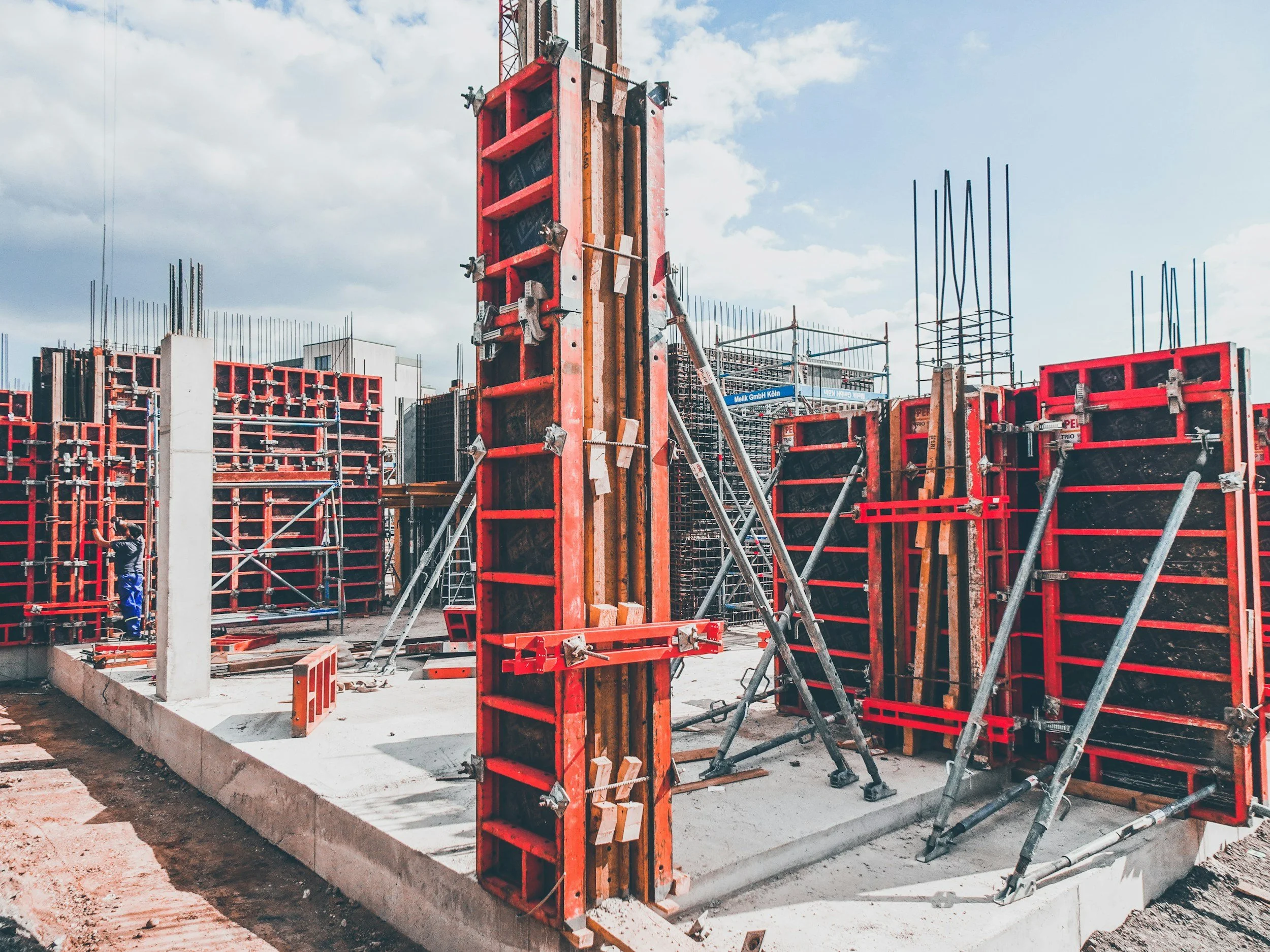
I work on the commercial side of construction - it's really all about managing money. We do monthly valuations with clients, which means we tell them this is the value of work we've done this month, this is what we'd like paid, please and thank you. Sometimes they'll come out to site and we'll walk around together to agree what's been completed.
Then we do the same thing with subcontractors - they apply to us for what they've done, and we check it. Have they done it? Do we agree with it? We're paying all our subcontractors, paying all our supply chain, getting orders together with consultants and specialists.
Change control is a big part of it too. The client might say something's changed, here's new drawings, can you add this on? Then we have to work out which subcontractors we need to contact. There's a lot of paperwork - forms to fill in before we can place orders, financial checks on companies, sign-offs from different people.
I'm site-based, working from the site cabins where the whole project team sits. I go out and walk around the actual site maybe once or twice every couple of weeks - I can gauge what's happening from the guys who are there every day. We've also got monthly reporting to do, cost value reports that go up to our director.
For example, today I spent the morning putting payments into the system, issuing payment notices to subcontractors, drafting a consultant order. This afternoon I've got a subcontractor order to pull together - those can take a couple of hours each.
What I enjoy about it
I like the mix of office-based and site-based work. I like being in different places, working on different kinds of jobs. I've worked on TECA, flats, the Bio Hub building at the hospital, NHS projects, Council work, Riverbank School, and now I'm at Aberdeen Beach. I didn't want to work for a house builder doing the same thing again and again - that repetitive nature wasn't for me.
I enjoy the social side, being part of a team. You spend more time at work than you do at home, so if you don't get on with the people you work with, it's not easy. I'm lucky - we've got a good group and I get on with everybody.
But I also enjoy being able to put my headphones in and zone out for a couple of hours when there's reporting to do. There's a balance between collaborative work and focused individual work.
I like that the maths has a purpose - there's an answer, somewhere to go with it. When you're looking at costs and budgets, the numbers mean something real.


What you learn on the job
You've got to be a people person. Most things can be taught, but you need to be open to other people's points of view and ways of doing things. You need to be able to talk to anybody and try to get on with everybody, even when you might want to shout sometimes. Just keep smiling and carry on.
Organisation is key. There's a lot of dates you have to hit - subcontractors have to be paid within certain timeframes, different contracts have different deadlines. Once you're in the swing of it, it becomes second nature. This is the week you do this, this is the week you do that.
Being self-sufficient matters too. I might not see my line manager for months because we're on different sites. You have to know what you need to do without someone constantly reminding you.
Understanding people is important in construction. It can be very stressful when deadlines are slipping - everyone's getting pressure from somewhere. You need to understand that and not let it phase you. I've learned to start saying no sometimes too, because I'm a people pleaser who would forget my own work to help someone else.
My advice
Don't be put off by it being a male-dominated industry. I've never once been made to feel like I shouldn't be there. The commercial team here actually has more females than males, and our director is female. You do need a thick skin - some things get said on site - but I've never experienced any real issues.
After you've got your foot in the door, it's very experience-based. I've seen people come in with degrees and people who started as trainees and worked their way up. Your degree kind of gets forgotten about once you've got real-world experience. It's about getting the job and starting.
The people skills matter as much as the technical knowledge. You need the background understanding, but you've also got to work collaboratively - it really is a one-team mentality. On bigger jobs you might have twelve people all feeding into one report at the end of the month. Everybody has to do their part to make it work.