Elise Ewen
Digital Construction Manager at Robertson
How I got here
Geography was my favourite subject at school. I really enjoyed it and thought about geology, but after going to an open day taster I decided it wasn't quite for me. I also really enjoyed graphic communications – I did that to Higher as well. I liked the drawings and using the models.
I didn't want to move away for uni, so it was Aberdeen or RGU. From the open days, I just preferred RGU. I found out about the architectural technology course and when it was explained to me, I thought that actually sounds like something I would enjoy. I didn't know what that course was or what it meant until I went to the open day.
In third year, I did my placement at Robertson's as a pre-construction intern. I was doing drawing registers, printing things off, making sure drawings were in the right place. I did that through second semester and the summer, then went back for fourth year while still working here part time.
Once I graduated, I got a full-time graduate position as a design manager, which is quite a standard fit for architectural technology. I did that for about five years. I always knew I was interested in the models and the digital side of things, but didn't quite know how to get into it.
It was really just good timing. I mentioned it at one of my PDRs and it all happened from there. I made the switch from design manager to digital construction manager. Having that design management background was a good base because you still need the technical knowledge when you're looking at these models – you have to know what you're looking at and whether something is actually a problem.
What I actually do day-to-day
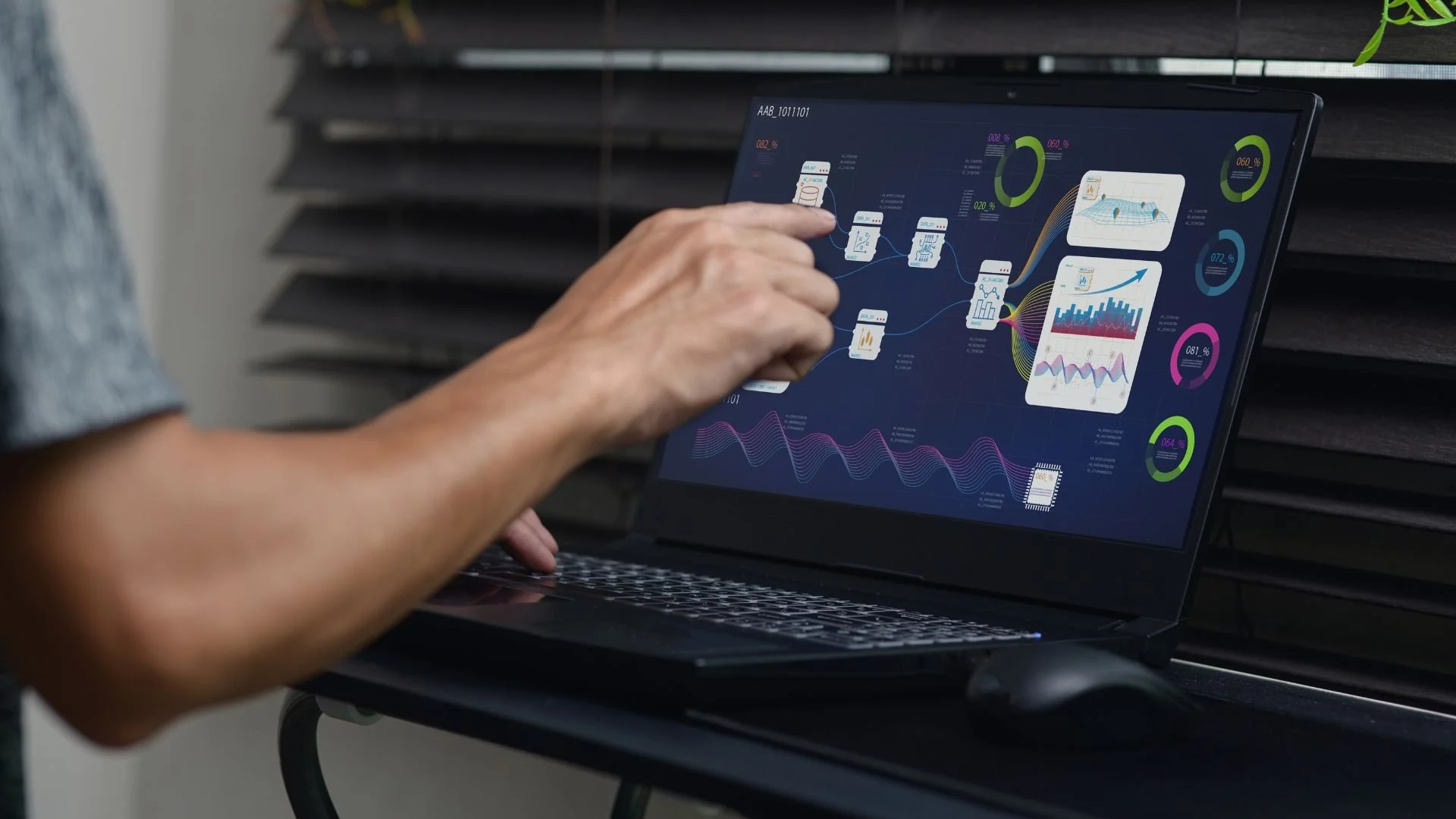
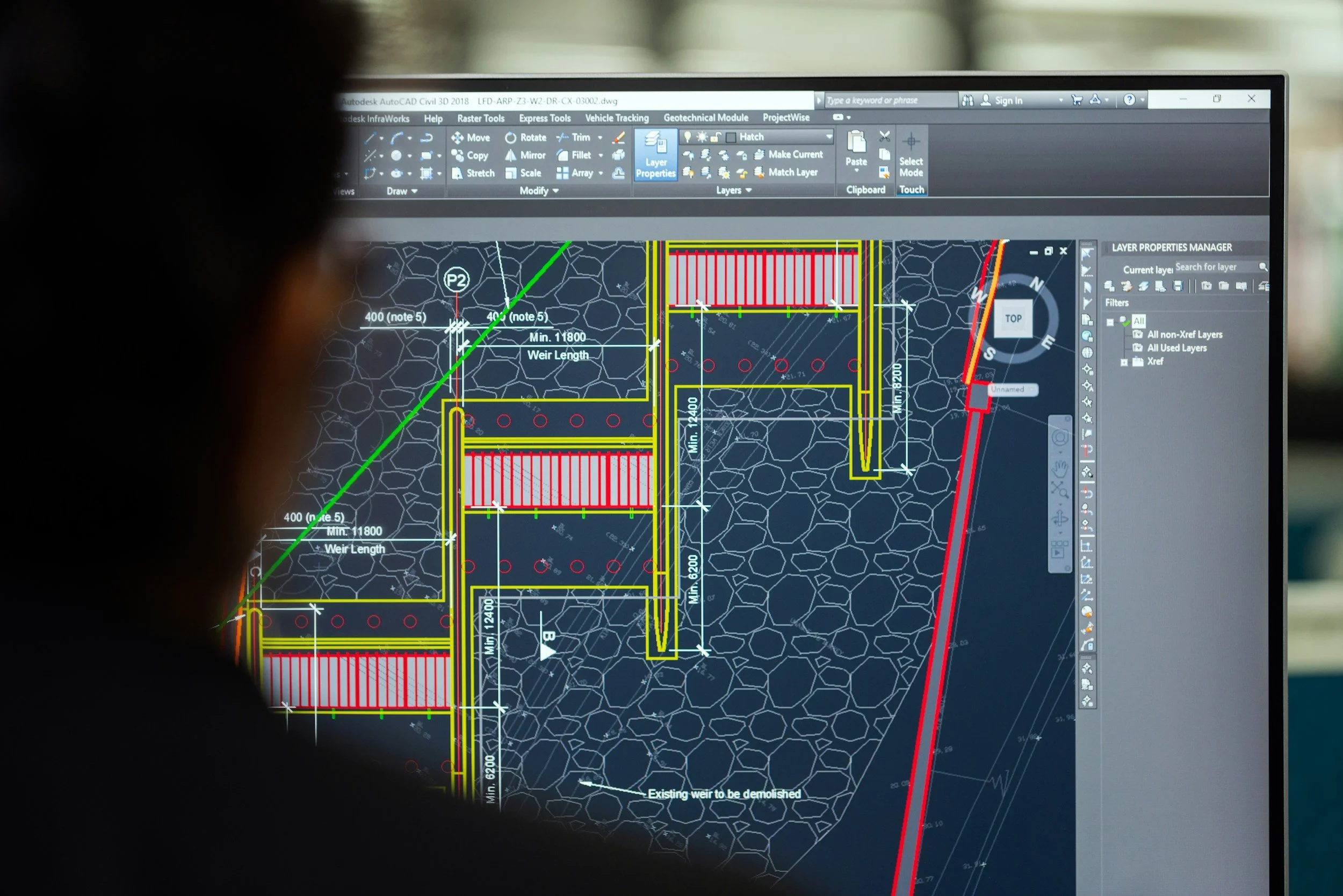
I spend a lot of my time looking at 3D building models from architects, engineers and building services engineers. I take them into our system – Autodesk Construction Cloud – pull them all together and run clash checks to make sure they're all talking to each other.
The models come from different people and get uploaded every two weeks because they're constantly being worked on. When I open them together, the system shows where things are clashing – you get red and green highlights when something's going through something else that it shouldn't be. Sometimes it's a pipe clashing with a steel beam because two separate people have done two separate models.
I run meetings with the design teams and the people who made these models. Sometimes it's a nice easy fix – just move that to the other side of the door. Sometimes it can't be moved and something else has to change. There's quite a lot of problem solving after the initial issue has been raised.
The other side of my role is making models for tenders. I model the site, where the site cabins are going, the phasing of the building – making animations showing the steel coming up and the cladding going on. That's the properly creative side.
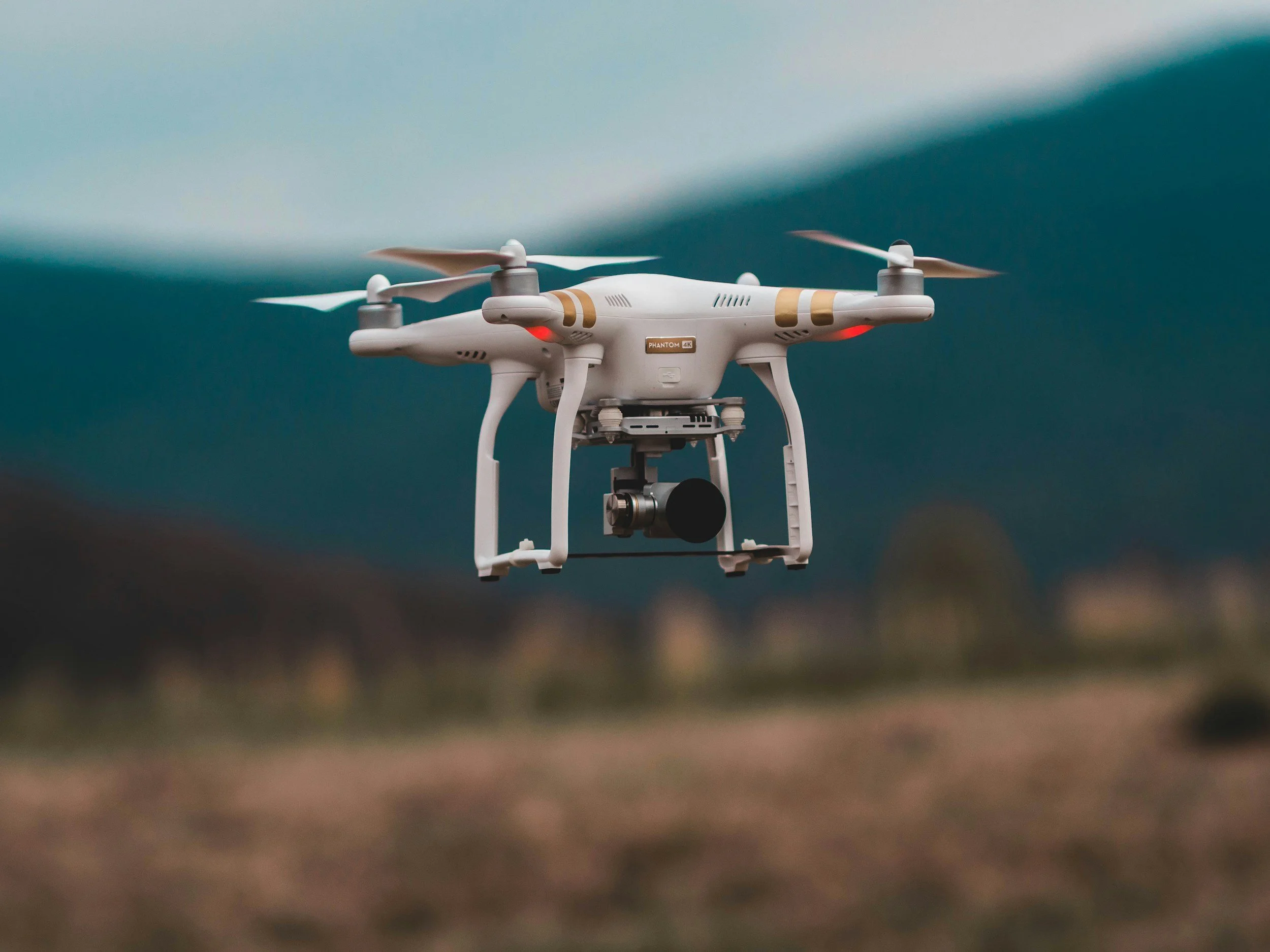
I'm also the drone pilot for the Aberdeen office. I go out to sites and get progress pictures and videos, sometimes used for marketing. It's nice to go out on site and actually see things in real life that you've seen on a screen.
About 50% of my time is doing clash checks, preparing for meetings, raising issues, setting due dates, making agendas, checking previous minutes. There's a lot of communication with design managers about what to concentrate on for the next meeting. For tenders, there's lots of speaking to operations teams – they decide how the site will be set out and give me all their information before I can turn it into an image.
What I enjoy about it
It's quite interesting because there's a lot of problem solving. It's not just sitting at a desk – you get to speak to quite a lot of people and it's more interesting than maybe other desk-type jobs. It's a bit more creative.
Even though I'm not actually doing those models myself, you're still having a bit of input to the design. And I enjoy going out on site with the drone – it's nice to be outside and away from the desk, and to actually see things being built that you've seen on screen.
What you learn on the job
You have to be able to communicate what the problem is to other people, because sometimes it's not really me that's solving it – I'm facilitating other people solving it. Sometimes you have to be a bit firm. A lot of the time someone might say "oh, that's the architect's problem" or "that's the engineer's problem" and you have to say "it's everyone's problem, let's work together to sort it out."
It's about reading the situation and seeing what's the best way to get people to do what you need them to do. Some people need a bit of tough love, others need to be convinced this is the best thing for everyone.
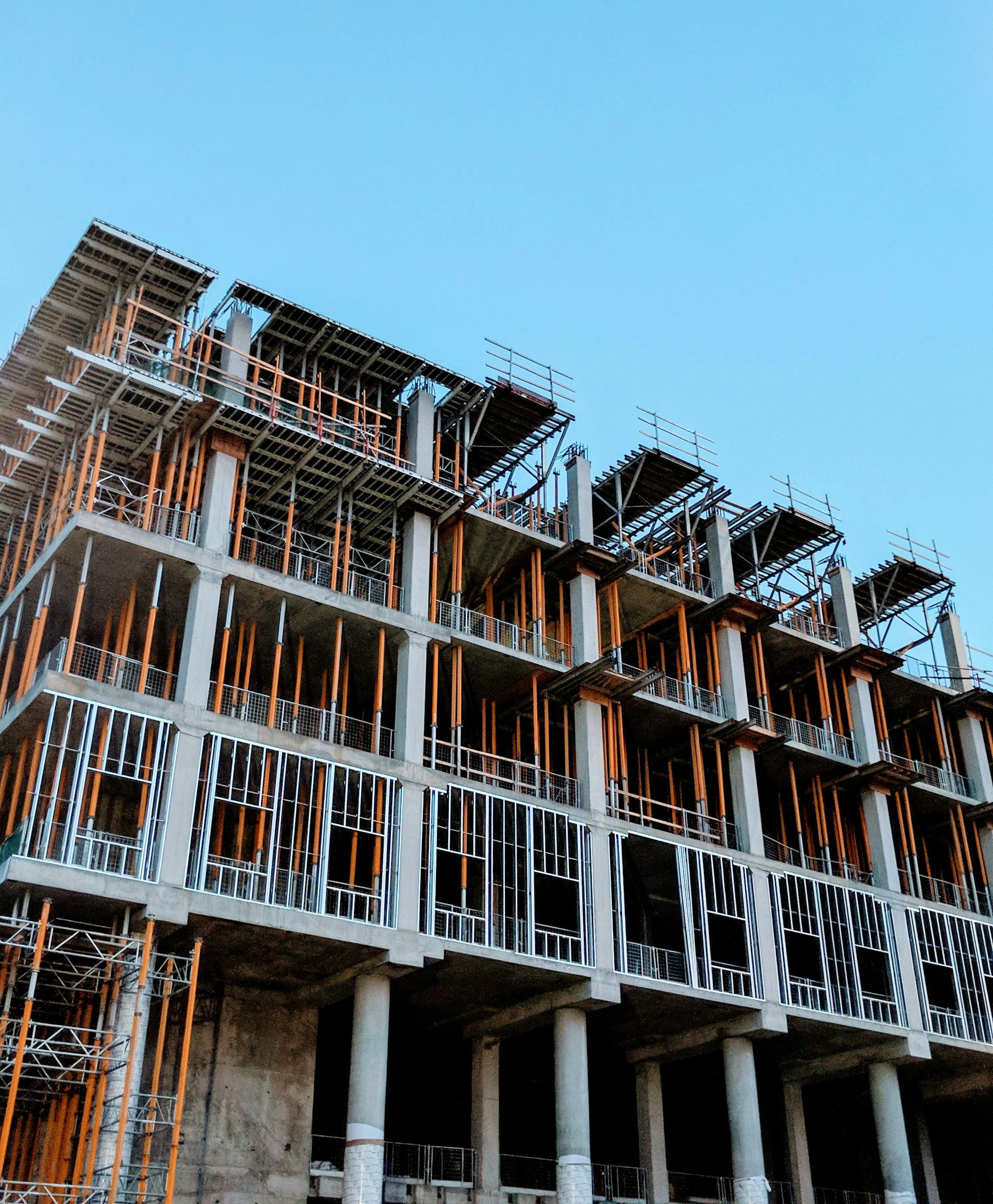
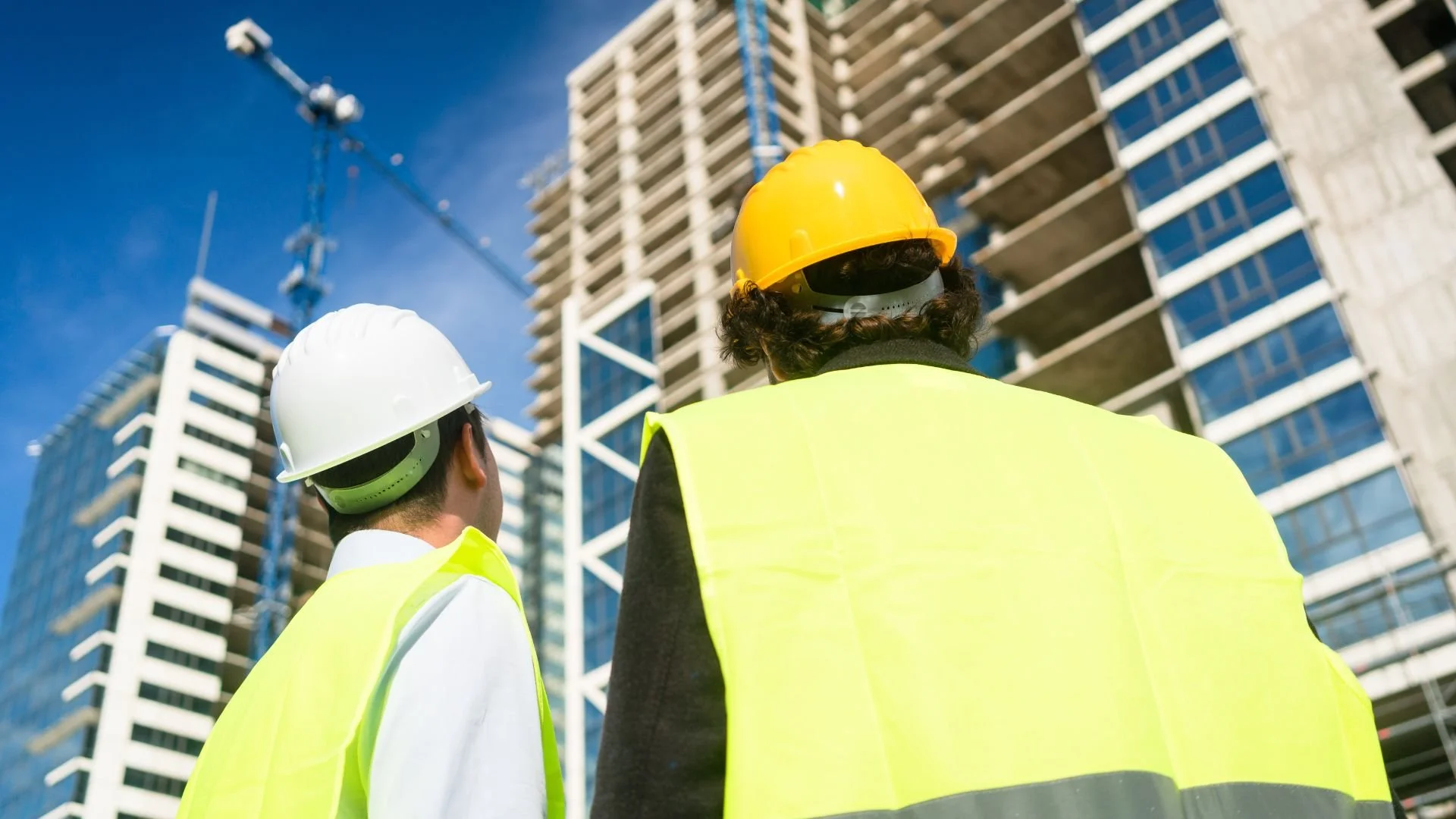
The technical building knowledge is really important. Sometimes things will flag up as a clash on the system because two objects are physically touching, but actually that is what will happen on site – so you know not to go any further with that one. I didn't fully understand what I was drawing at uni until I went out onto a building site and physically saw it being built.
My advice
The thing that would make someone stand out is if they actually had any sort of experience. Even if it was working physically on a site – it's about having the understanding of what buildings actually look like, what the process is, the method, the order.
It maybe has to be unpaid during the summer holidays between uni, but if someone had actually spent a bit of time in a design department or on a site, that would stand out. It's all very well seeing something on a drawing, but until you see those bricks on top of each other with the steel beams and all the rest of it, it doesn't really mean anything.
If you're going for a digital role specifically, having a portfolio where you can demonstrate you're capable of creating really nice renders and presenting things well would help. And if you're interested in new technologies, that's a good sign – the digital team are the first ones to try out new things and push them into the rest of the business.
You don't have to have been a design manager before. One of our digital construction managers used to work for Autodesk, so she knows a lot about the software but probably has less technical building knowledge. There are different paths. A lot of it you could learn on the job, but I do think it helps having that technical building knowledge in the background – it puts everything into context.