
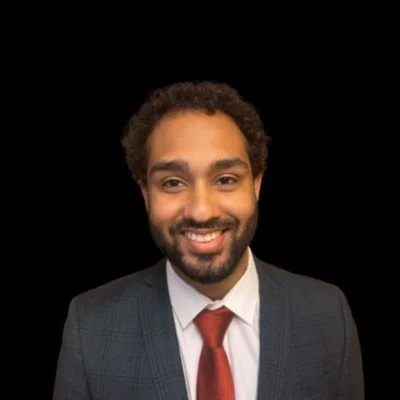
Kamil Feroz Hussein
Design Engineer at Vital Energi
How I got here
I'm 27, so I got into education quite late. I did an access course to get to university, then did my degree in aerospace engineering at Liverpool.
When I went into uni, I'd always had an interest in sustainability. I was initially interested in some of the stuff Airbus were doing with hydrogen and sustainable fuel. But during my degree they kind of disillusioned me a little bit with hydrogen, so I started looking for alternative things. I did some decarbonisation work with AstraZeneca, and my dissertation was on vertical farming. I moved away from aerospace because I didn't really want to get into the weapons industry.
When I found Vital, it was because I saw some of the decarbonisation projects they were doing and I thought, this is up my street. For me, you want a career that can meet your personal goals whether financial or creative but at the same time you want something that's ethical. Something where you can say you've left this place at least making it better than it was before.
My first job after graduating was a later-stage design role, and it was very much like everyone was busy, they'd give you a design with some markups, you'd draw it, but you weren't actually understanding what was going where. I couldn't do that. I really needed to understand what's going on, visualise it, see it.
When I came to Vital, the work environment was completely different. People were helpful, and I actually got to go out and see sites, look stuff up, figure out what things are. Going from first principles. I feel like I've learned so much more.


What I actually do day-to-day
I'm on a graduate programme doing rotations, but right now I'm in pre-construction, which is the early stages. The main thing I'm doing is energy modelling.
For one of the projects I'm working on with Westminster, we've been given about 61 sites all across London. I go out and do a quick site survey you go around and see all the things like whether they've got LEDs, whether there's space on the roof for solar panels, all these energy conservation measures.
We come back and do analysis whether or not they can do any of these measures, get some ballpark figures. We give it over to them to see if they want to progress, then we send it over to our design team who are in the later stages.
Depending on the project, the desk-based to site ratio really varies. For this Westminster project with 61 sites, I was going out probably every week. They sent me out for nine sites, and I did about three days just nonstop going to sites, coming back, writing notes, trying to do modelling afterwards. But most often it's probably like 90-10 desk to site. That's something quite nice there is the option to actually go and see what you're doing, see the site, see how something's going to fit.
When you're doing analysis, it's a lot of Excel. There is room for things like Python, but it's just less accessible for people. You can follow Excel and you can teach Excel very easily. Every company just has massive calculators that you put numbers into. It's less that you're going out and doing hand calculations. The intelligence of it is mainly just figuring out your assumptions and making sure they're accurate before you start putting things into calculators.
We also do other projects. If someone wants a heat pump or something like that, they'll come to us. We'll do the first few stages, get some initial ideas, look at heat loads, how many people are living there, how much will that change their need for domestic hot water. We'll get a decent figure going, get the project moving, and send it off to our design team.
What I enjoy about it
Going out and actually seeing things, having time to look stuff up and figure out what things are. Really understanding from first principles rather than just diving into schematics. That's really improved me as an engineer.
The impact of the work. For me, it's about finding something where you can work with a clean conscience. This industry is booming. Everyone's trying to move towards decarbonisation, not only from an ethical point of view but there's massive financial incentives. If you reduce energy use, you reduce energy bills. Right now, electricity prices in the UK are among the highest in the world. So it's a massive industry that's growing.
The work environment. My first job was very much like the TV show Severance everyone was too busy to really explain things. Here, people are very helpful. There's time to learn properly.

What you learn on the job
You need to be able to handle moving from task to task quite quickly. Some of these early-stage projects, we're moving fast. You'll be given a task that needs doing in a few hours, then you'll get another task. If you're someone who needs to spend a long time on one particular thing, some of the later stages might be more interesting. Right now we're trying to get the ball moving as quickly as possible.
Communication and organisation are very important. When you work with people who are disorganised versus people who are organised, you see the massive difference. You want to be in a place where you do a piece of work and someone can look at your stuff and pick it up if you're not in or you've got something else.
Because you're doing site surveys, it's good to be able to talk professionally as well.
The deep technical stuff if you've survived uni, you'll be fine. A lot of what we're doing is kind of first-year level. It's really just good communication skills and good organisation skills. If you have that, you should be fine.
My advice
It's a very booming industry. Everyone is trying to move towards decarbonisation. Don't worry about not being able to find a job if you go into this field it's massive and growing.
Try and find some kind of interest and show it. When I got this job, the interview was so funny because I had all these things I was researching about the company, but they just started talking about my vertical farming project. For about 30 minutes out of the 40-minute interview, I was just talking about it. If you have a genuine interest, it's so apparent when you start talking about it. Make sure you're putting in little things, whether it's finding a dissertation you actually love or doing side projects.
Those things differentiate you from other people you're competing with, and some of those people are extremely intelligent. Make sure you're engrossed in your subject and that you brand yourself in that way. If you're really interested in sustainable design, make sure you're doing something to show that you actually believe it, not just saying it.
For me, the marker is intentionality. It's making decisions about do I feel I'm doing the right thing? That integrity thing. You have to sit there and say, I'm walking towards somewhere. You do have to deal with those questions yourself what is a good thing, what is a bad thing? For me, sustainability definitely is something I want to chase. So long as I've tried to get towards the right direction, that's the most important thing.