

Design Engineer
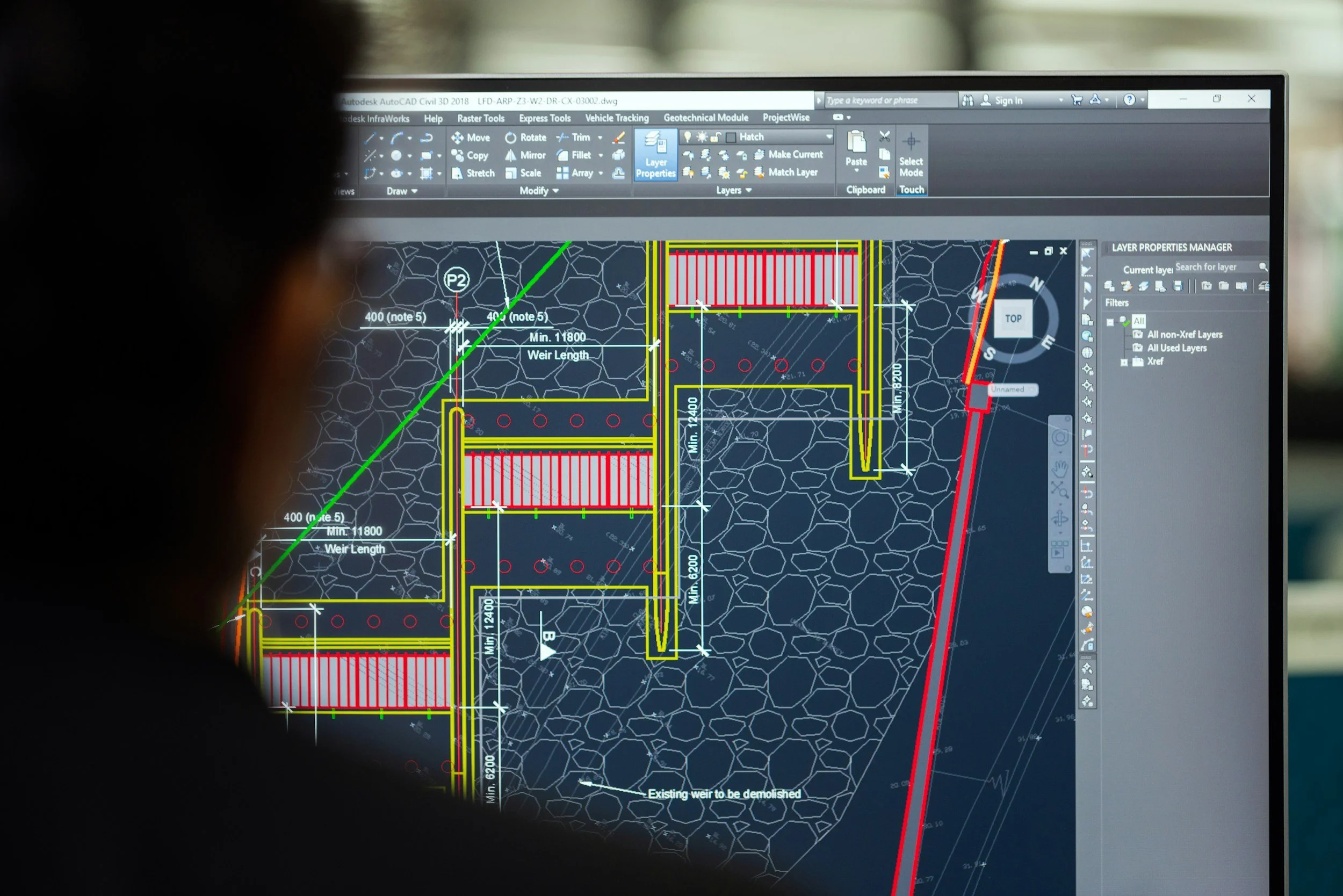
This page gives you the real story about what it's like to be a Design Engineer (with insights from people actually doing the job).
Your goal: Decide if this sounds interesting enough to explore further, or if it's clearly not for you. Both answers are useful!
It will take about 5 minutes to read through - by the end, you'll know if this is worth exploring or if you should look at something else.

What is this job?
Design engineers work on the early stages of projects before anything gets built. You're roughing things out, working out if ideas will actually work, and doing the initial calculations and designs.
Think of it like sketching out the plan before someone else draws the detailed blueprint. You're figuring out how much energy a building will need, where pipes should go, what size equipment is required. You do the groundwork so the detailed design team knows what they're building.
It's problem-solving work with spreadsheets and CAD software. You're not just following instructions you're making decisions about what will work and what won't, based on calculations and your understanding of how systems work.
What do they do day to day?
You work in a team, usually splitting time between your desk and occasionally visiting sites to see what you're actually designing for.
Modelling and calculations:
- Building spreadsheet models to predict how much energy buildings will use
- Checking assumptions and spotting mistakes in the numbers
- Working out heat loads, flow rates, pipe sizes
- Running feasibility studies to see if projects make sense
Early-stage design work:
- Creating 2D layouts in CAD showing where equipment and pipes will go
- Drawing schematics of how systems connect together
- Specifying what equipment is needed
- Preparing scopes of work for consultants who'll do the detailed design
Site work:
- Visiting buildings to survey what's there
- Checking if your designs will actually fit in the space
- Seeing how existing systems work
- Taking measurements and notes
Who you work with:
- Other design engineers in your team
- People from commercial, operations, and business development teams
- External consultants who take your work to the next level
- Clients, housing developers, or local councils
Where you work:
- Mainly office-based (or working from home)
- Occasional site visits a few days a month or week depending on the project
- Meetings throughout the day, often on Teams



How much do they earn?
Salaries vary depending on the company, location, and your experience level. Here's a rough guide for design engineer roles:
Apprentice (Standard Engineering Apprenticeship) £16,000 £28,000 per year
You're learning on the job while earning. Entry-level apprenticeships start around £16,000-£18,000, while more advanced engineering apprenticeships can reach £25,000-£28,000.
Apprentice (Degree Apprenticeship) £18,000 £30,000 per year
You're working full-time and studying for a degree at the same time. Typical starting salaries are £18,000-£22,000, rising to £25,000-£30,000 as you progress through the programme.
University Graduate £25,000 £32,000 per year
Starting salary after completing a degree in engineering.
With Experience (1-3 years) £30,000 £40,000 per year
Experienced (5+ years) £35,000 £50,000 per year
Senior Level (8+ years) £50,000 £65,000+ per year
What affects your salary:
- Which company and sector you work in renewable energy, building services, infrastructure
- Location London pays more but has higher living costs
- Whether you become a chartered engineer (CEng status)
- Specialist skills in certain systems or software
Remember: These are approximate figures for the UK and can vary. The good news is there's clear progression as you gain experience, and many design engineers move into project management or specialist technical roles.
You'll Be Successful In This Career If...
You're curious about how systems work
Good design engineers don't just follow procedures they want to understand why. When you're modelling energy use or designing pipe layouts, you need to know how each component affects the others. If you just apply formulas without understanding what's happening, you'll miss problems and make mistakes.
You can handle moving between tasks quickly
In early-stage work, projects move fast. You might get a task that needs doing in a few hours, then get pulled onto something else. If you need to spend long periods deep in one thing without interruption, you'll find this frustrating. If you like variety and can switch between different projects, it suits you.
You work well with people from different teams
You're constantly getting information from commercial teams, operations, business development, consultants. You need to be comfortable asking questions, chasing people for what you need, and explaining technical stuff to non-engineers. If you just want to work alone at your desk, this isn't that.
You have proper attention to detail
You'll spend time checking spreadsheet models, spotting where a cell isn't referenced correctly or an assumption is wrong. Numbers that look slightly off need investigating. It's not exciting work, but if you're the type who spots when something doesn't add up and wants to track it down, you'll do well.
You're organised and keep track of things
When you're juggling multiple projects with different deadlines, you need to know where everything is. Your work needs to be organised so someone else can pick it up if you're away. If your files are a mess and you can't find what you need, you'll make everyone's life harder including your own.
The Bottom Line
If you're curious about how systems work, comfortable with numbers and spreadsheets, can stay organised when juggling tasks, and prefer working with a team rather than alone then design engineering could be a strong fit. If you want hands-on practical work or need to see physical things being built to stay interested, look at other engineering roles instead.
The routes to the role:
Modern Apprenticeship:
- Learn on the job while studying for qualifications
- Takes around 2-4 years depending on the level
- Earn £16,000-£28,000 while training
- No university debt
- Many engineering companies offer these across different sectors
University degree:
- Study mechanical, electrical, or energy engineering
- Apply to graduate schemes in your final year
- Starting salary £25,000-£32,000
- Some companies offer sponsorship for specific courses
Degree Apprenticeship (Level 6):
- Work full-time and study for a degree at the same time
- Takes 3-5 years to complete
- Earn £18,000-£30,000 while studying
- Company pays your tuition fees
- Graduate with a degree and 3-5 years of experience
What helps:
- Good maths and physics GCSEs and A-levels (or equivalent)
- Interest in how buildings and energy systems work
- Any experience with Excel or CAD software
- Understanding the climate and energy challenges we're facing
Insights from people who do the job

Kamil Feroz Hussein
Design Engineer at
Vital Energi

Owen Scott
Design Engineer at
Vattenfall